Writer Notes That Leaked Onto Live Pages
Notes written for a person started showing up on a live blog post once a script took over publishing. I added a check that strips the kinds of note I already know about and stops the publish when it finds a note it doesn't recognise.
Key Results
- 3 writer-note lines removed automatically from a post before it went out
- 3 live pages cleaned in one fix on 24 Sep 2026
- Publish checks went from 4 to 5
- 7 of 7 live-site sweeps on 24 Sep 2026 came back clean
- 4 days from the leak to a lasting fix
What was broken
Every day a posting sheet tells us what goes on which website, and that sheet was written for a person. Each website section ended with a few lines meant only for the person doing the posting: one line listed related reading, one was labelled as the call to action, and one gave the character count.
The person knew these lines were instructions, so they read them and never pasted them. Because of that, the notes never reached a reader.
On 16 Sep 2026 I moved website publishing from that person to a script. The script copies each section exactly as it is written. Before anything went live, it ran four checks: one on the title, one for empty fields, one on who owns the work and one for names that should never appear on the site. None of the four looked for writer notes, and nobody had asked for that check, because a human had always done that filtering without being told to.
On 20 Sep 2026 a blog post went live with all three note lines showing at the bottom, so any reader could see the character count.
The same day, five older posts were cleaned up by hand. That fixed the pages but left the cause in place, because no check was added, and the problem was free to come back on the very next post.
What I built
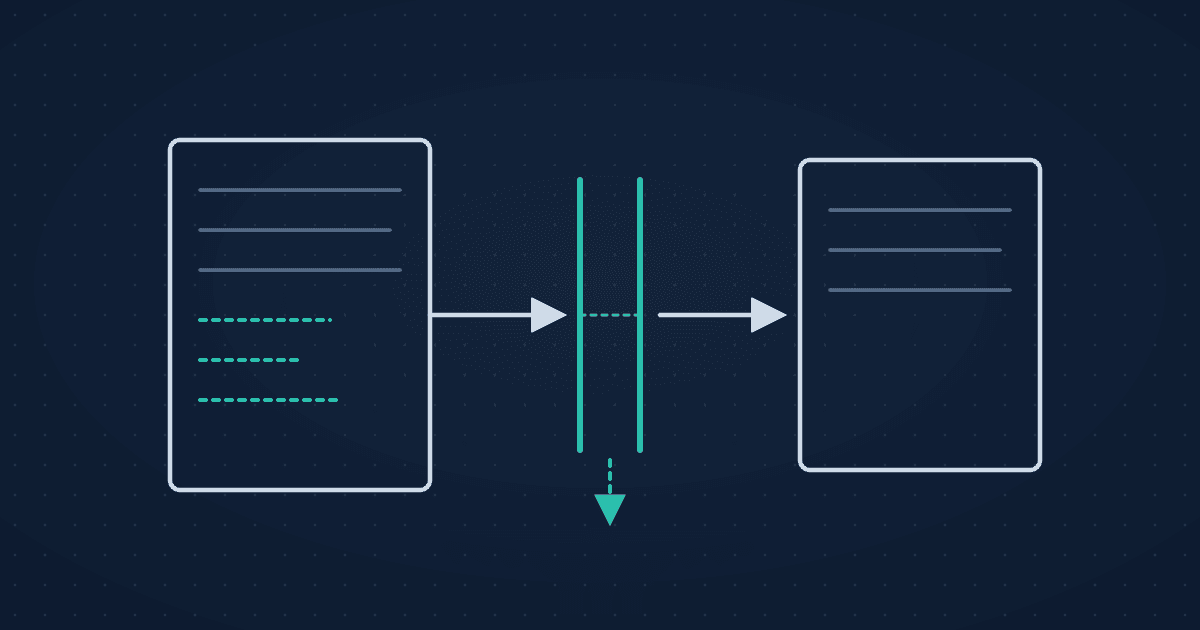
I built a small filter that runs before every publish, and it has two layers.
The first layer removes the kinds of note I already know about. The related reading line goes, the character count goes, and the topic cross references go. For the call to action, only the label goes and the sentence stays, because that part was written for the reader.
The second layer looks at whatever is left. If anything still looks like a note, the publish stops; it doesn't guess and it doesn't let the line through. A new kind of note I've never seen before stops the publishing lane instead of going live.
That second layer matters most. The first layer only knows about mistakes that have already happened, while the second one catches the ones that haven't happened yet.
The filter is now the fifth check in the publish run, alongside the other four. The publish run also sweeps the live site for notes that got through before the check existed.
What changed
On 24 Sep 2026 I ran a fix across the live site, and it cleaned 3 pages in one go.
Then I ran the publisher again on the sheet that had caused the leak. The log shows the filter removed 3 note lines from the post before anything else happened, and the call to action line lost its label while keeping its sentence. The new notes check passed. Because the post was already live, the run skipped it and overwrote nothing.
That day the live-site sweep ran 7 times, across dry runs and real runs, and all 7 came back clean.
It took 4 days to get from the leak on 20 Sep to a fix that lasted on 24 Sep. The first fix, done by hand on 20 Sep, didn't hold; the second fix was a check, and it has held.
What I would do differently
When I took the job off a person, I copied what they did, but I didn't copy what they knew. Skipping those note lines had never been written down anywhere, so it lived only in that person's head, and the script had no way of knowing it.
Next time I hand any task from a person to a system, I'll sit with the person first and ask one question: what do you look at and quietly ignore? Those unwritten rules are the ones that break first.
I'd also never again accept a clean-up by hand as the end of a fix. Cleaning five pages felt like progress at the time, but a fix that doesn't add a check just leaves the same mistake waiting for the next run.
And I'd build the "stop if unsure" layer first. A list of known bad shapes is useful, but the rule that blocks anything unknown is what actually keeps the site safe.
Want a similar result?
Let's talk about installing the right operating system for your business.
Book a Call